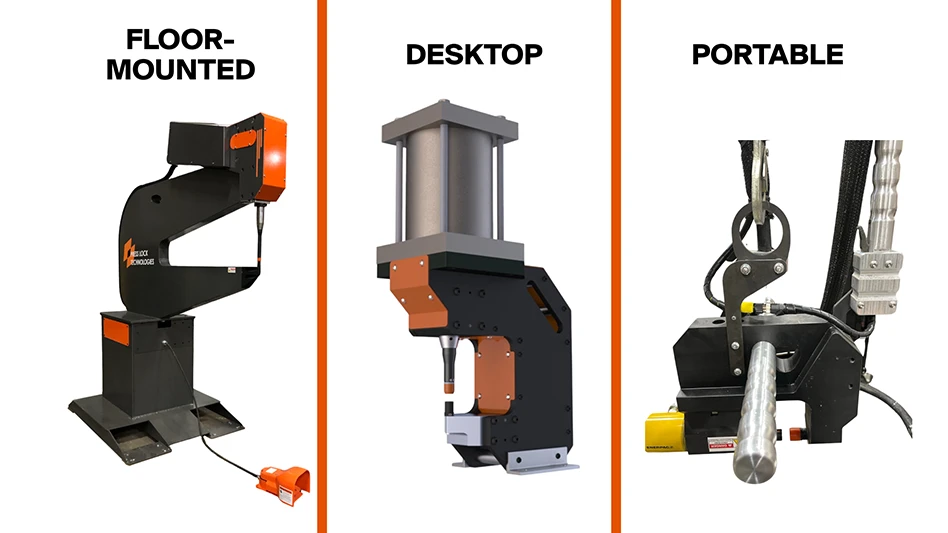
ALL PHOTOS COURTESY PRESS LOCK TECHNOLOGIES
Aerospace manufacturers are always on the lookout for new technologies that can improve product quality, reduce costs, and simplify production. Clinching, a sheet metal joining process, is gaining attention as a potential alternative to traditional methods like spot welding.
This article explores how clinching works, the advantages it offers over spot welding, the materials it can join, and why aerospace manufacturers should consider adopting this innovative technique.
How clinching works to create a joint
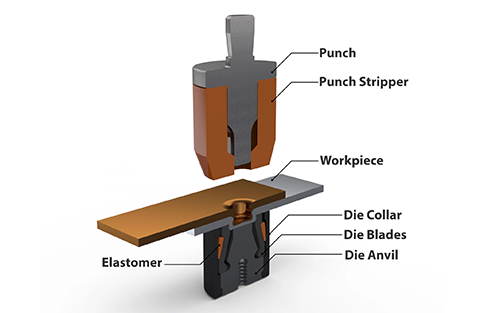
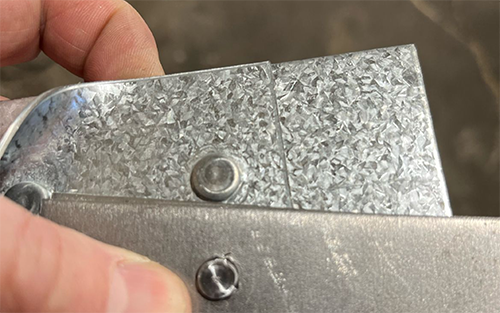
Clinching is a mechanical joining process that uses a punch and die to form a permanent connection between two or more pieces of sheet metal. Unlike welding, which relies on heat to fuse the materials together, clinching machines create a joint by mechanically interlocking the sheets.
The process involves the following steps:
- Insertion: The two pieces of metal are placed between a punch and a die.
- Compression: The punch is pressed into the metal, deforming it and forcing the material into the die cavity.
- Forming the joint: The deformation creates a cold-formed interlock, securely joining the two pieces without the need for external fasteners or welding.
This process is fast, clean, and can be done without the need for additional materials like welding rods or flux.
Advantages compared to spot welding
Spot welding has been a widely used method for joining sheet metal in various industries, including aerospace. However, clinching offers several distinct advantages:
● No heat generation: Since clinching doesn't rely on heat, there's no risk of thermal distortion, which is particularly important in aerospace manufacturing, where precision and material integrity are crucial.
● Faster cycle time: Clinching is typically faster than spot welding, making it ideal for high-volume production.
● Energy efficient: Unlike spot welding, which consumes a significant amount of energy to generate heat, clinching uses far less energy and doesn't require specialized equipment like transformers.
● Clean and safe: Clinching doesn't produce hazardous fumes or waste, making it a more sustainable option compared to spot welding.
● Stronger joints: The mechanical interlock created by clinching often results in stronger joints compared to those made by spot welding, which can be prone to weak spots due to inconsistent heat application.
Materials that can and can't be clinched
Clinching is versatile, but it does have some limitations when it comes to materials. The process works best with materials that have good ductility, allowing them to form a secure interlock.
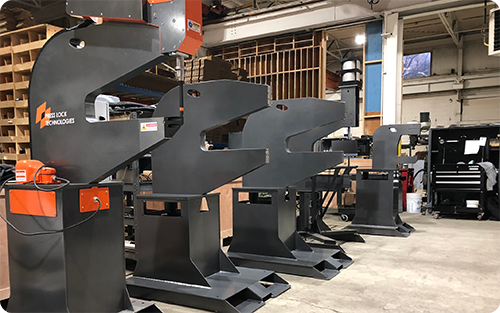
The following materials are commonly used in clinching:
● Aluminum: Widely used in aerospace, aluminum’s ductility makes it a perfect candidate for clinching.
● Mild steel: Clinching works well with mild steel sheets, especially in applications where strength and durability are essential.
● Stainless steel: Clinching can also be used with stainless steel, though the process may require adjustments depending on the thickness and grade.
● Copper: Copper is a suitable material for clinching.
However, there are materials that are less suitable for clinching, including:
● Hard metals: High-strength steels and other hard alloys can be difficult to clinch due to their limited ductility.
● Brittle materials: Materials like some plastics or brittle metals may crack during the deformation process and are not ideal candidates for clinching.
If you’d like to learn more about suitable materials, please read the in-depth article about the topic.
Benefits for aerospace manufacturing
The aerospace industry has strict requirements for safety, performance, and cost-efficiency. Clinching offers several specific advantages that make it a valuable tool for aerospace manufacturers:
● Precision: Clinching provides a precise and repeatable process, which is essential for creating the high-quality components required in aerospace applications.
● Reduced weight: With clinching, there’s no need for additional fasteners or welds, which can add unnecessary weight to the components. This weight reduction can be particularly beneficial in aerospace, where every gram counts.
● Corrosion resistance: The absence of heat in the clinching process means there is no risk of oxidation or corrosion at the joint site, an essential factor in aerospace where components are exposed to harsh environmental conditions.
● Improved structural integrity: The interlocking mechanism formed by clinching often results in a stronger joint, which can withstand the stresses and strains experienced by aerospace components during flight.
● Cost savings: Clinching eliminates the need for expensive welding equipment, materials, and consumables. The fast cycle times also result in lower labor and production costs.
Clinching as a viable option for aerospace manufacturing
Clinching is an emerging alternative to traditional sheet metal joining methods like spot welding. Its fast, energy-efficient, and environmentally friendly nature makes it particularly appealing for high-precision industries like aerospace manufacturing.
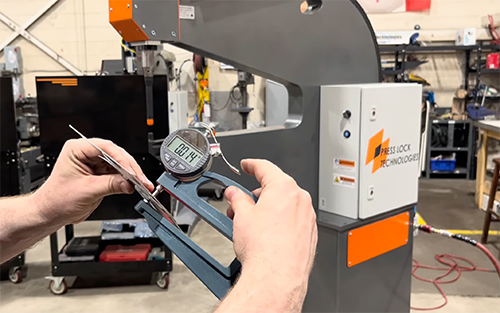
By offering strong, precise joints without the need for heat or external fasteners, clinching enables manufacturers to improve product quality while reducing costs and cycle times. As more aerospace companies discover the benefits of this joining method, clinching is poised to become a key technology in the aerospace manufacturing sector.
Latest from Aerospace Manufacturing and Design
- The power of the plasma pen: Revolutionizing adhesion in aerospace manufacturing
- Mazak will show shops how to drive production at Dallas Open House
- Heavy-duty pneumatic flex locators
- Tacky Tape vacuum bag sealing tapes for aerospace composites continue a legacy
- Embraer’s Phenom 300 series is best-selling light jet for 14th consecutive year
- Expanded PushPull connector portfolio
- AEC is Meltio’s official sales partner
- Coolant-thru options for straight, 90-degree, universal live tools