Unmanned aerial vehicles (UAVs) offer great promise for search-and-rescue efforts, agricultural monitoring, weather monitoring, coverage of news and sporting events, and oil and gas exploration.
The Federal Aviation Administration (FAA) is expected to allow restricted commercial UAV use starting in December 2014; the agency has already granted some exceptions to filmmakers. For now, officially, UAVs can fly for hobby or recreation and must stay below 400 feet away from airports and air traffic, and within sight of the operator.
Once commercial use does get the green light from the feds, UAVs will add an estimated $82 billion to the economy and create more than 100,000 jobs between 2015 and 2025, according to research by the Association for Unmanned Vehicles Systems International (AUVSI). More than 500,000 UAVs have been sold in the United States since the flying robots began lifting off a decade or so ago, according to one manufacturer’s recent estimate.
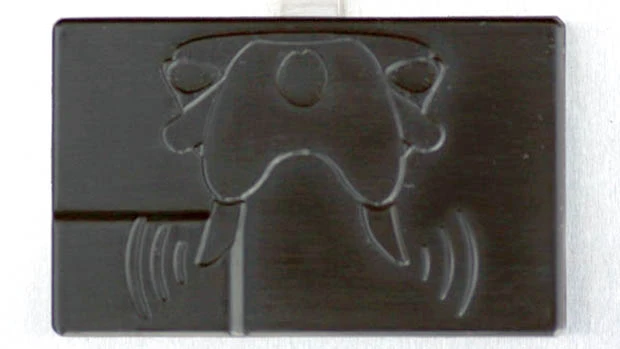
 Hoping to make waves in that growing market is Fighting Walrus, a Brisbane, Calif., startup. The company's Fighting Walrus Radio adds a 900MHz telemetry radio to an iPad or iPhone and uses open-source software to communicate with popular small UAVs such as 3DRobotics' IRIS multicopters and others that use the popular MAVLink telemetry protocol. When attached, the radio enclosure looks kinds of like “a walrus peering over the edge of (an) iPad,” providing inspiration for the company’s whimsical name.
 The company launched about two years ago, Galusha explains, financing the project through an online Indiegogo crowdfunding campaign. While going through the process to get Apple’s “made for iPad” stamp of approval, Fighting Walrus is taking preorders for the radio through its website.
Meanwhile, Fighting Walrus has begun taking preorders on a new product, a smaller antenna it calls the iDroneLink. It is “quickly moving towards an MFi approved shippable product,” and is expected to ship in January, according to the company's website. The acronym refers to Apple's MFi (“Made for iPad” and “Made for iPhone”) licensing program for electronic accessories that connect to such devices.
The iDroneLink will support crowdfunded UAVs such as the Pocket Drone and Hexo+ that cater to the “follow-me” segment of UAV users, who would attach it to an iPhone, stow it in a pocket, and get ready for their close-up, Galusha says. “The premise is that the drone will follow you and film wherever you go, like having a third-person GoPro camera at your side.”
The look and feel of Apple products inspired Galusha to choose Proto Labs’ magnesium thixomolding process to produce the two magnesium parts that clamp the Fighting Walrus Radio onto an iPad or iPhone and house the radio antenna, Galusha says. “Their iPhones, iPads, and MacBook Pros all have this beautiful metal finish and style," describes Galusha. "We wanted to use the metal as a material to emulate and work in that ecosystem. That's how we settled on thixomolding."
 Magnesium thixomolding uses chipped magnesium feedstock that is heated in the barrel of an injection molding press. A reciprocating screw works the material into a thixotropic (gel-like) state and the material is forced into a steel mold at high speed and pressure, creating fully dense, net-shape magnesium parts. Final parts, like the ones molded for Fighting Walrus, are strong, lightweight, and can maintain detailed features.
Proto Labs’ customer service engineers suggested magnesium thixomolding as a solution. “The biggest plus to thixomolding was the cost. You get metal parts, but it’s at a fraction of what it would cost for a typical machined part, at least at our volume,” Galusha explains. “You can get a lower price quote on machined parts that are square or have a simpler design, but with thixomolding, you can get these beautiful, complex curves at basically no additional cost.”
Two pieces of liquid silicone rubber that help the magnesium clamp hold onto the iPad or iPhone were also injection-molded at Proto Labs, Galusha says, as well as two machined plastic parts that hold the connector that plugs into the iOS device.
“We 3D printed some parts, but the ones we did ourselves don't have the same precision and the same finish of the additive parts from Proto Labs," Galusha says. “We're really excited to try some of the new 3D printing technologies at Proto Labs.”
Fighting Walrus more recently ordered tooling from Proto Labs for plastic parts for its iDroneLink product.
Source: Proto Labs
Latest from Aerospace Manufacturing and Design
- Archer to test Starlink onboard its Midnight air taxis
- System eliminates cage-creep in sliding bearings
- Bodo Möller Chemie signs worldwide supply contract with Airbus
- Sandvik Coromant's CoroTurn Plus turning adapter
- ZOLLER Technology Days & Smart Manufacturing Summit May 13-14, 2026 in Ann Arbor, Michigan
- Walter's TC620 Supreme multi-row thread mill family
- ThermOmegaTech achieves CMMC Level 2 C3PAO certification
- One-touch precision flex locators