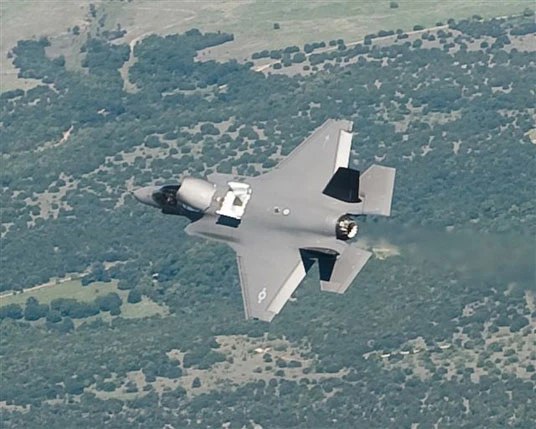
Lockheed Martin Corp., the world’s largest defense contractor, is in negotiations with the Pentagon about tying profits in the $27 billion development phase of the delayed joint strike fighter to successful tests and plane deliveries, a company executive said.
"We anticipate earning our award fees on completion of specific" development goals, Dan Crowley, Lockheed’s general manager for the program, said in a telephone interview. "It won’t be easy. They are going to set the bar high for us."
Delays of the F-35, the Pentagon’s most expensive weapons program, have prompted Defense Secretary Robert Gates to reduce planned purchases of the plane in the fiscal years from 2011 through 2015. More than $2.8 billion that was budgeted to buy the military’s next-generation fighter would instead be used to continue its development, according to a 2011 budget document.
Negotiations, which may be completed by June, would eliminate the government’s discretion to pay Lockheed for on-paper performance while linking fees to flight tests and deliveries of the 19 developmental fighters that have averaged six months behind schedule. Profit may be tied to the successful first flight of the F-35’s aircraft-carrier version, for example, Crowley said.
Lockheed plans to build 2,456 of the fighters in three variants for the U.S. Air Force, Navy, and Marine Corps. The F-35 had an estimated cost of $298 billion in 2007. Crowley said the remaining fee Lockheed may earn amounts to "several hundreds of millions" of dollars.
Lockheed is the prime contractor on the F-35, and development and production of test aircraft is centered in Fort Worth, where about 7,000 people are working on the program.
Gates’ decision on F-35 funding was made in parallel with a review by the Pentagon’s top weapons buyer, Ashton Carter.
Carter is assessing whether the program’s development phase should be lengthened beyond October 2014 because of delays in delivering 10 of 13 test aircraft needed to fly the 5,000 sorties required by the test plan
Latest from Aerospace Manufacturing and Design
- Precision XY gantry system
- Archer to test Starlink onboard its Midnight air taxis
- System eliminates cage-creep in sliding bearings
- Bodo Möller Chemie signs worldwide supply contract with Airbus
- Sandvik Coromant's CoroTurn Plus turning adapter
- ZOLLER Technology Days & Smart Manufacturing Summit May 13-14, 2026 in Ann Arbor, Michigan
- Walter's TC620 Supreme multi-row thread mill family
- ThermOmegaTech achieves CMMC Level 2 C3PAO certification