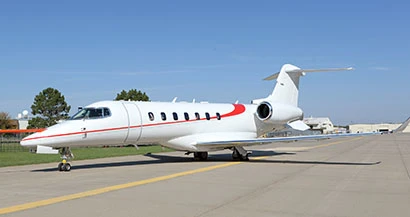
Bombardier Aerospace officials have announced that Learjet has obtained the first flight test permit from the Federal Aviation Administration (FAA) for the Learjet 85 aircraft Flight Test Vehicle 1 (FTV1). In addition, engine run testing and low-speed taxi testing have been successfully completed on the flight test vehicle.
During the final testing stage in preparation for first flight, the Learjet 85 aircraft program team will finalize the configuration of the aircraft and conduct further engine runs and high-speed taxi tests.
“We have successfully completed preliminary testing on the Learjet 85 FTV1 and we are now one step closer in achieving the first flight,” said Ralph Acs, vice-president and general manager, Learjet 85, Bombardier Business Aircraft. “We’re committed to offering our customers state-of-the-art aircraft and we look very much forward to showcasing the Learjet 85 jet, the biggest Learjet aircraft ever, during its maiden flight,” he added.
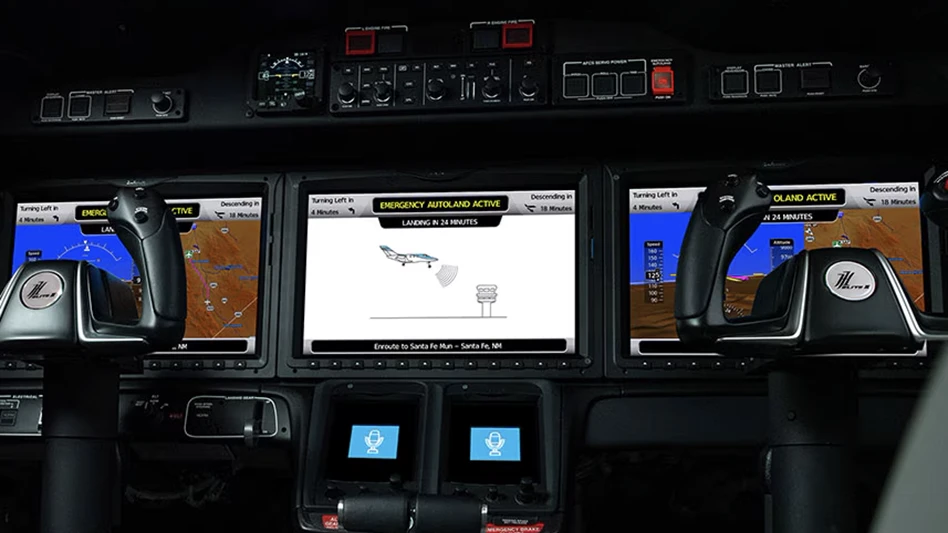
The Learjet 85 aircraft flight deck combines technological advancements and design aesthetics from the Bombardier Vision flight deck.
The aircraft’s cabin management system will feature a high-capacity Ethernet network, a digital amplifier to feed the high-fidelity speaker system, and an interface to support the aircraft cabin environment, including lighting and temperature control. The system’s open architecture also allows for easy integration of third-party equipment and new applications, such as high-definition features.
The Learjet 85 aircraft targets a high-speed cruise of Mach 0.82 and a transcontinental range of approximately 3,000nm (5,556km).
Source: Bombardier Business Aircraft
Latest from Aerospace Manufacturing and Design
- North Aircraft Industries to manufacture Horizon Aircraft’s Cavorite X7 wings
- Automated surface finishing of 3D-printed parts
- C.R. Onsrud annual factory Demo Day is March 25, 2026
- Axial grooving system introduced
- Manufacturing technology orders set record in December 2025
- High-performance HV fuses
- Fives and Prestige Equipment partner
- Precise command over how drawings are annotated, shared