In the past few weeks, Boeing officials have inked agreements for 27 Next-Generation 737 -800 and -900 series jetliners, and announced plans to increase production from 38 airplanes per month to 42 per month in the first half of 2014.
Boeing and Aerolineas Argentinas, the flag carrier of Argentina, have completed an agreement for 20 Next-Generation 737-800 airplanes. The agreement, valued at $1.8 billion at list prices, will play a key role in Aerolineas Argentinas' continued efforts to modernize its fleet and increase passenger satisfaction. When the order is finalized, it will be posted as a firm order to the Boeing Orders and Deliveries website.
At a signing ceremony in Buenos Aires Oct. 21, 2013, Dr. Mariano Recalde, president of Aerolineas Argentinas and Austral Lineas Aereas, and Van Rex Gallard, vice president of Sales, Latin America, Africa and the Caribbean for Boeing Commercial Airplanes, formalized the agreement, which will help Aerolineas build on a fleet of 26 Next-Generation 737s currently operated by the Argentine carrier.
"This is a landmark order for our company, both in the number of aircraft and in what they signify for our fleet," says Dr. Recalde. "This agreement is a key part of a greater plan to renew our fleet and prepare our operations to accommodate growing demand. The Boeing Next-Generation 737-800, which has more seats than our current single-aisle fleet, will give us more flexibility to operate both domestic and regional routes."
On Oct. 24, 2013, Boeing and EL AL Israel Airlines finalized an order for two additional Next-Generation 737-900ER (Extended Range) airplanes. The order comes just two weeks after the Israeli flag-carrier took delivery of its first 737-900ER. This order brings the total number of 737-900ERs ordered by EL AL to eight.
"This decision by EL AL to purchase two more 737-900ER aircraft demonstrates our good relationship with Boeing," says Elyezer Shkedy, president and chief executive officer of EL AL Israel Airlines. "We are committed to provide our passengers on our medium and short-haul routes with the highest quality product and service, allowing EL AL to continue to be the first choice now and in the future."
EL AL's 737-900ERs feature the innovative Boeing Sky Interior, which features modern sculpted sidewalls and window reveals, LED lighting to enhance the sense of spaciousness, and larger pivoting overhead stowage bins.
EL AL operates an all-Boeing fleet of nearly 40 airplanes including Next-Generation 737-700s and 737-800s, 747-400s, 767s and 777s.
At the end of September, Alaska Airlines officials announced an order for five additional Next-Generation 737-900ERs (Extended Range). The order, valued at $481 million at list prices, continues Alaska Airlines' investment in its fleet and efforts to improve fuel performance.
The largest and newest model in the Next-Generation 737 family, the 737-900ER can carry up to 26 more passengers or fly about 500nm (926km) farther than the 737-900. Alaska Airlines operates the 737-900ER in a two-class configuration with 181 seats and features the Boeing Sky Interior. In addition, all of Alaska's seats will feature outlets providing dual 110V and USB power.
According to Boeing figures, the longer range of the 737-900ER has substantial economic advantages over competing models, including 6% lower operating costs per trip and 4% lower operating costs per seat mile.
Alaska Airlines now has unfilled orders for 35 737-900ERs and 37 737 MAX airplanes.
Also on the last day of September, Delta Air Lines celebrated the delivery of the carrier's first Next-Generation 737-900ER. The delivery is part of Delta's 100-airplane order placed in 2011 to renew its single-aisle fleet with more fuel-efficient airplanes.
The 737-900ER, which seats 180 passengers and features the Boeing Sky Interior, joins Delta's existing fleet of 737-700 and 737-800 airplanes.
Boeing delivered to UTair, one of Russia's national carriers, its first directly purchased Next-Generation 737-800, on Oct. 9, 2013. The airline currently has 40 Next-Generation 737s on order to be delivered in the next several years.
A few weeks earlier, Boeing delivered the first Next-Generation 737-800 to Aviation Capital Services LLC, a subsidiary of the State Corp. Russian Technologies (Rostec). Aviation Capital Services has leased the airplane to Russia's flag carrier, Aeroflot. This delivery is the first of 50 Next-Generation 737s Aviation Capital Services has on order, including 737-800s and 737-900ERs.
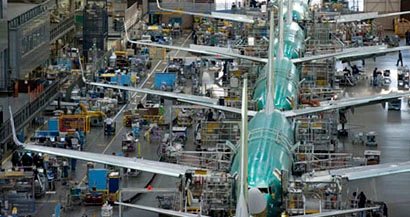
As a result of these sales, Boeing officials announced on Oct. 31, 2013, that production on the 737 program will increase to 47 airplanes per month in 2017, the highest rate ever. Once implemented, the 737 program will build more than 560 airplanes per year, and will have increased output by nearly 50% since 2010.
"We're taking this step to make sure our airplanes get into the hands of our customers when they need them," says Beverly Wyse, vice president and general manager, 737 Program, Boeing Commercial Airplanes. "This increase will lay a solid foundation as we bridge into production on the 737 MAX."
Boeing currently produces 38 airplanes per month from its Renton, Wash., factory and will increase the rate to 42 per month in the first half of 2014. First delivery of the 737 MAX is on track for third quarter of 2017, company officials say.
The original 737-100 first flew in 1967, and to date, 266 customers worldwide have placed more than 11,200 orders for the single-aisle airplane – including more than 6,500 orders for the Next-Generation 737 and more than 1,600 orders for the 737 MAX. Boeing currently has more than 3,400 unfilled orders across the 737 family.
Source: Boeing
Latest from Aerospace Manufacturing and Design
- The Lee Company opens Innovation Center
- Precision XY gantry system
- Archer to test Starlink onboard its Midnight air taxis
- System eliminates cage-creep in sliding bearings
- Bodo Möller Chemie signs worldwide supply contract with Airbus
- Sandvik Coromant's CoroTurn Plus turning adapter
- ZOLLER Technology Days & Smart Manufacturing Summit May 13-14, 2026 in Ann Arbor, Michigan
- Walter's TC620 Supreme multi-row thread mill family