A beginner’s guide to automation
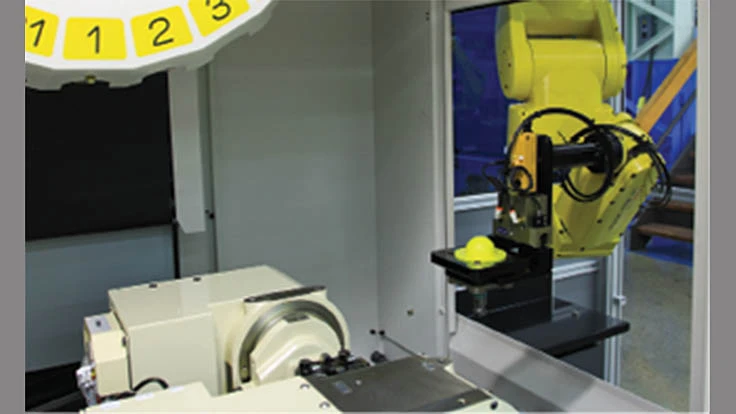
Years ago, automation was something that only companies with substantial production could afford. The automation technology that’s available today is affordable enough for more shops to consider and flexible enough to be effective for lower lot sizes, but where should a beginner start? While we will focus on cells based on an articulating robot, the same concepts can be applied to other forms of automation. Part 1 of 3
Here are a few questions to ask when considering an automation cell. You may want it to unload and load the machine tool, but do you want something designed to load only one type of part or something flexible enough to handle other parts as well? A system handling a family of parts could keep the change-over to a minimum, or the cell could be designed to handle almost anything within a certain size range – but flexibility tends to cost more money. How often and what kind of change-over are you expecting? Learn more at the digital edition of this story.
Latest from Aerospace Manufacturing and Design
- The power of the plasma pen: Revolutionizing adhesion in aerospace manufacturing
- Mazak will show shops how to drive production at Dallas Open House
- Heavy-duty pneumatic flex locators
- Tacky Tape vacuum bag sealing tapes for aerospace composites continue a legacy
- Embraer’s Phenom 300 series is best-selling light jet for 14th consecutive year
- Expanded PushPull connector portfolio
- AEC is Meltio’s official sales partner
- Coolant-thru options for straight, 90-degree, universal live tools