Airbus
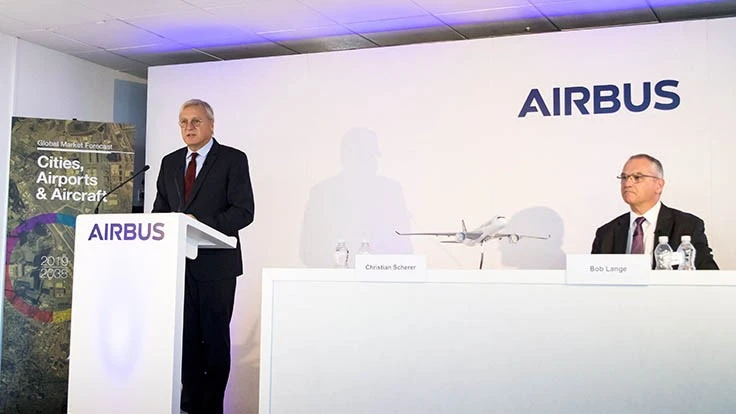
The world’s passenger and freighter aircraft fleet will more than double from today’s nearly 23,000 to almost 48,000 by 2038 with traffic growing at 4.3% annually, also resulting in a need for 550,000 new pilots and 640,000 new technicians.
By 2038, of the forecast 47,680 plane fleet, 39,210 are new and 8,470 remain from today.
Of these, 25,000 aircraft are for growth and 14,210 are to replace older models with newer ones offering superior efficiency.
“The 4% annual growth reflects the resilient nature of aviation, weathering short term economic shocks and geo-political disturbances. Economies thrive on air transportation. People and goods want to connect,” said Christian Scherer, Airbus Chief Commercial Officer and Head of Airbus International. “Globally, commercial aviation stimulates GDP growth and supports 65 million livelihoods, demonstrating the immense benefits our business brings to all societies and global trade.”
Review the Airbus Global Market Forecast 2019-2038 here.
More stories from the past week:
Mitsubishi Aircraft Corp. is opening SpaceJet Montreal Center, initially adding 100 jobs in Quebec.
Gulfstream’s East Campus opens at company headquarters in Savannah, Georgia.
Latest from Aerospace Manufacturing and Design
- Archer to test Starlink onboard its Midnight air taxis
- System eliminates cage-creep in sliding bearings
- Bodo Möller Chemie signs worldwide supply contract with Airbus
- Sandvik Coromant's CoroTurn Plus turning adapter
- ZOLLER Technology Days & Smart Manufacturing Summit May 13-14, 2026 in Ann Arbor, Michigan
- Walter's TC620 Supreme multi-row thread mill family
- ThermOmegaTech achieves CMMC Level 2 C3PAO certification
- One-touch precision flex locators