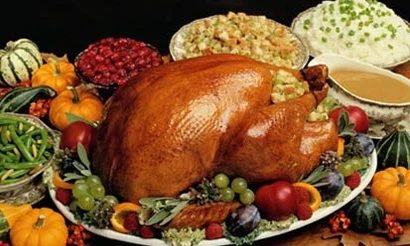
The modern Thanksgiving holiday traces its origins from a 1621 celebration at the Plymouth Plantation, where the Plymouth settlers held a harvest feast after a successful growing season. This was continued in later years, first as an impromptu religious observance, and later as a civil tradition.
Squanto, a Patuxet Native American who resided with the Wampanoag tribe, taught the Pilgrims how to catch eel and grow corn and served as an interpreter for them (Squanto had learned English while enslaved in Europe and during travels in England). Additionally the Wampanoag leader Massasoit had donated food stores to the fledgling colony during the first winter when supplies brought from England were insufficient. The Pilgrims set apart a day to celebrate at Plymouth immediately after their first harvest, in 1621. At the time, this was not regarded as a Thanksgiving observance; harvest festivals existed in English and Wampanoag tradition alike. Several colonists gave personal accounts of the 1621 feast in Plymouth, Massachusetts. The Pilgrims, most of whom were Separatists, are not to be confused with Puritans who established their own Massachusetts Bay Colony nearby (current day Boston) in 1628 and had very different religious beliefs.
Latest from Aerospace Manufacturing and Design
- Archer to test Starlink onboard its Midnight air taxis
- System eliminates cage-creep in sliding bearings
- Bodo Möller Chemie signs worldwide supply contract with Airbus
- Sandvik Coromant's CoroTurn Plus turning adapter
- ZOLLER Technology Days & Smart Manufacturing Summit May 13-14, 2026 in Ann Arbor, Michigan
- Walter's TC620 Supreme multi-row thread mill family
- ThermOmegaTech achieves CMMC Level 2 C3PAO certification
- One-touch precision flex locators