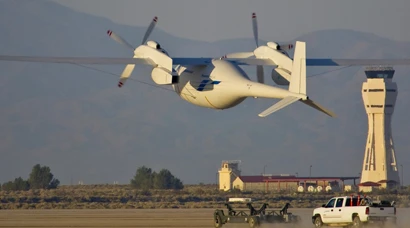
The Phantom Eye flew for 28 minutes and reached an altitude of 4,080ft at a cruising speed of 62 knots during the June 1, 2012 flight at NASA’s Dryden Flight Research Center at Edwards Air Force Base.
During the landing, the gear broke when it dug into the lakebed. The plane is designed to stay aloft for up to four days, at altitudes of up to 65,000ft, providing “persistent monitoring over large areas.” Boeing describes the liquid-hydrogen propulsion system as environmentally responsible, with the only byproduct being water.
This aircraft is the newest in a series of Boeing-funded rapid prototyping programs including Phantom Ray, Echo Ranger, ScanEagle Compressed Carriage, and an associated Common Open Mission Management Command and Control.
Latest from Aerospace Manufacturing and Design
- The power of the plasma pen: Revolutionizing adhesion in aerospace manufacturing
- Mazak will show shops how to drive production at Dallas Open House
- Heavy-duty pneumatic flex locators
- Tacky Tape vacuum bag sealing tapes for aerospace composites continue a legacy
- Embraer’s Phenom 300 series is best-selling light jet for 14th consecutive year
- Expanded PushPull connector portfolio
- AEC is Meltio’s official sales partner
- Coolant-thru options for straight, 90-degree, universal live tools