NASA (CNW Group/ABB)
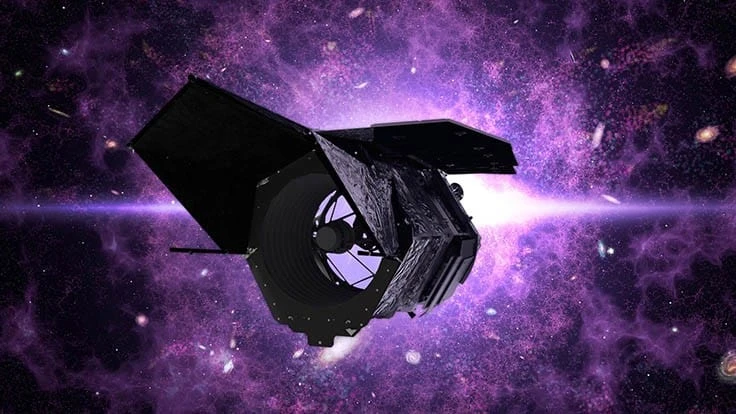
The Nancy Grace Roman Space Telescope, NASA's future space observatory, is due to launch in 2025 in search of other earth-like worlds. It carries two instruments: one to study the mystery of dark energy distribution in the cosmos; and the first dedicated exoplanet imaging camera in space, the CoronaGraph Imager (CGI). Within the CGI will be two high sensitivity cameras with electronic cores developed by ABB together with Nüvü.
The ABB contract win follows a recent contract award from GHGSAT, a private satellite constellation operator, to supply additional optical sensors capable of imaging methane leaks on the ground in high definition.
"The Roman mission is a $3.2 billion project which should be 100x to 1,000x more powerful for imaging exo-planets than what is achieved on the ground today. We are very proud to be supplying such a critical component in this groundbreaking mission. It is an exciting project which will require our most advanced technological expertise to succeed," stated Marc Corriveau, General Manager ABB Measurement & Analytics Canada.
"We are thankful to the Canadian Space Agency (CSA) Space Technology Development Program which enabled this revolutionary camera technology to be brought to a maturity level sufficient for its consideration by NASA's Jet Propulsion Laboratory," said Olivier Daigle, chief technology officer at Canadian-based company Nüvü Camēras.
Extra-solar planetary systems are extremely difficult to observe from large distances as planets are tremendously dimmer than their neighboring star and barely separated from one another. NASA's CGI complex arrangement of optical components manage to block out the star light and send the residual light of the nearby planet to a highly sensitive camera. This is where the unique ABB/Nüvü imaging solution comes at play in revealing the unusual dot that was previously invisible.
ABB optical equipment already in space cumulates more than 90 years of reliable operation. The SCISAT sensor tracks long-term composition changes in the earth's atmosphere of more than 60 molecules and pollutants down to parts per trillion since 2003. Weather agencies around the world base their predictions on ABB technology at the heart of the latest generation of polar satellites of the National Oceanic and Atmospheric Administration (NOAA), which saves lives by improving the timeliness and accuracy of weather forecasts for up to seven days. ABB sensors are also flying onboard the Japanese GOSAT 1 and 2 satellites monitoring at high accuracy the steady rise of greenhouse gases around the world since 2009.
Latest from Aerospace Manufacturing and Design
- Archer to test Starlink onboard its Midnight air taxis
- System eliminates cage-creep in sliding bearings
- Bodo Möller Chemie signs worldwide supply contract with Airbus
- Sandvik Coromant's CoroTurn Plus turning adapter
- ZOLLER Technology Days & Smart Manufacturing Summit May 13-14, 2026 in Ann Arbor, Michigan
- Walter's TC620 Supreme multi-row thread mill family
- ThermOmegaTech achieves CMMC Level 2 C3PAO certification
- One-touch precision flex locators