Credit: GIE Media
Editor's Note: This article originally appeared in the May 2025 print edition of Aerospace Manufacturing and Design under the headline “Aerospace tariffs explained.”
Increased, reciprocal, imposed, paused. Words frequently used in describing tariffs President Donald J. Trump proposed in changes to U.S. trade agreements April 2, 2025.
The policy puts an additional duty on imports from all trading partners starting at 10%, with initial increases to 11% to 50% depending on the nation. Some imports are exempt, notably those already given preferential treatment in the United States, Mexico, and Canada (USMCA) trade agreement. Imports of aluminum and steel are covered by section 232 of the Trade Expansion Act of 1962 and amendments.
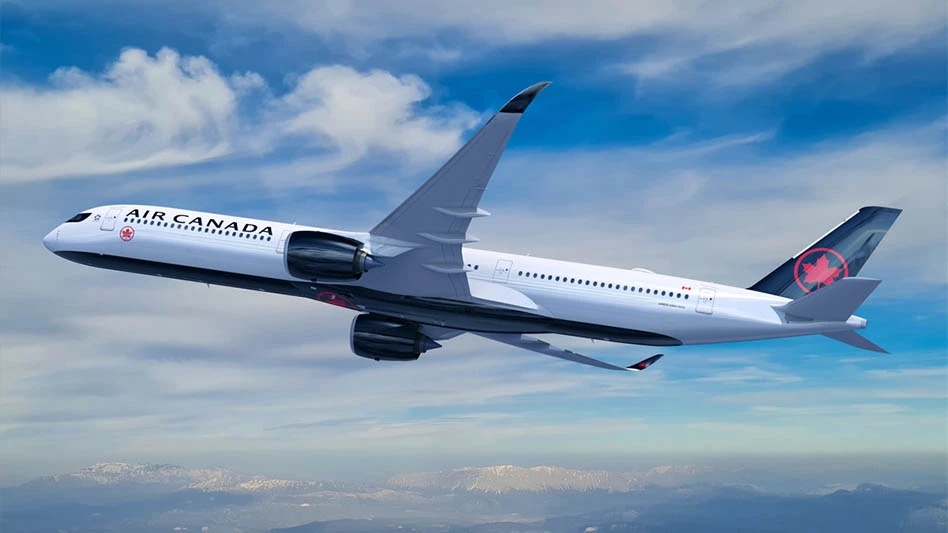
However, imports of aircraft, their parts, and components haven’t been fully explained, leading to uncertainty in the aerospace supply chain. The 1980 World Trade Organization (WTO) Agreement on Trade in Civil Aircraft (CAA) generally exempts aerospace components from tariffs. The United States allows duty-free entry of CAA-covered products and articles regardless of country of origin, according to the Aeronautical Repair Station Association.
Seeking greater clarity, I contacted global management consulting firm McKinsey & Co. and their aerospace experts to ask, “Are commercial aircraft components exempt from tariffs?”
Latest from Aerospace Manufacturing and Design
- The power of the plasma pen: Revolutionizing adhesion in aerospace manufacturing
- Mazak will show shops how to drive production at Dallas Open House
- Heavy-duty pneumatic flex locators
- Tacky Tape vacuum bag sealing tapes for aerospace composites continue a legacy
- Embraer’s Phenom 300 series is best-selling light jet for 14th consecutive year
- Expanded PushPull connector portfolio
- AEC is Meltio’s official sales partner
- Coolant-thru options for straight, 90-degree, universal live tools