Editor's Note: This article originally appeared in the September 2025 print edition of Aerospace Manufacturing and Design under the headline “The hidden costs of one-size-fits-all tooling.”

In aerospace manufacturing, productivity often hinges on the smallest variables: tool geometry, chip flow, or even the angle of a cutting edge. So it’s surprising how often shops try to simplify operations with general-purpose tools, hoping one solution can serve multiple materials, setups, and operations. It’s a practical instinct, but one often leading to costly inefficiencies. I’ll explain why this approach falls short and how optimized tooling can boost productivity.
A one-size-fits-all approach may seem appealing at first glance, as it might simplify operations and cut down on inventory. But on the shop floor, it rarely lives up to its promise and often actually ends up compromising on every part of the machining process.
These compromises are often subtle at first. You may need to use slightly slower feeds to prevent tool wear, notice minor chatter on thin walls, or deal with a dropped part requiring hand blending. But over time, these trade-offs stack up, causing larger inefficiencies such as longer cycle times, more scrap, and a higher labor input. And while general-purpose end mills have certainly evolved, they’re not a replacement for application-specific tooling, particularly in aerospace where tolerances are tight, materials are unforgiving, and parts are rarely simple.
Here are some of the most common areas where using a one-size-fits-all approach damages productivity.
Slotting and pocketing
While their strength, heat resistance, and low weight make them valuable materials for aerospace manufacturing, titanium and nickel-based alloys including Inconel are notoriously difficult to machine. For example, titanium has poor thermal conductivity, meaning most of the heat generated during cutting stays concentrated at the cutting edge. If a tool isn’t specifically designed to withstand this thermal load, it’ll likely wear prematurely or chip under pressure.
Despite this, many shops use the same end mill for slotting and pocketing to simplify setups. However, slotting and pocketing place very different demands on a cutting tool, particularly in materials such as titanium and Inconel.

Slotting typically involves full-width engagement, creating a lot of heat and pressure at the tool’s edges and corners. On the other hand, pocketing requires lighter radial engagement and faster tool movements, where chip evacuation and smooth entry are key.
A general-purpose end mill might manage both tasks in mild steel, but in titanium or Inconel, this mismatch in demands can lead to edge wear, chipped flutes, or even catastrophic tool failure, often happening midway through a cut. Eventually, these failures erode productivity and process stability. Operators may need to slow feeds to protect the tool, extend cycle times to avoid breakage, or stop the machine more frequently for manual inspections.
Application-specific tooling is a much better approach for slotting and pocketing. Using one tool optimized for high-load slotting and another designed for lighter, faster pocketing ultimately results in higher productivity and better-quality results.
Finishing thin-walled components
What works well for roughing can quickly become a liability during finishing, especially for thin-walled components such as compressor casings and blisks. These components require a delicate balance of force and precision. Even light tool pressure can cause thin walls to vibrate or flex under load, leaving visible marks requiring manual blending or rework.
This problem is compounded when shops attempt to use the same tool for roughing and finishing, assuming the geometry that holds up under heavy cuts can simply be dialed back for final passes. But general-purpose tools often lack the edge prep, rake angles, and vibration-dampening features necessary for clean, stable finishing on fragile features.
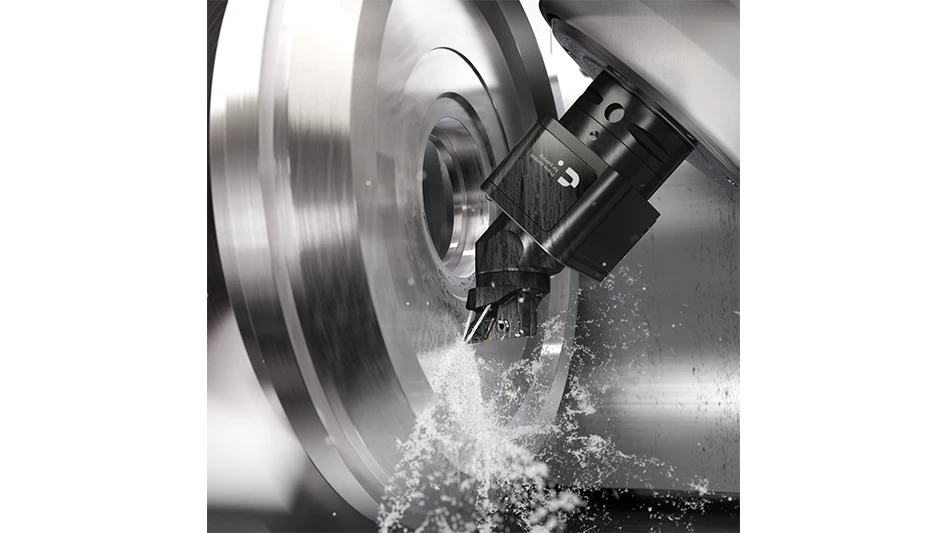
For thin-wall finishing, a dedicated tool is much more efficient than a general-purpose one. For example, Sandvik Coromant’s CoroMill Plura barrel is specifically designed for profiling applications. Its barrel design allows for larger step-overs while maintaining surface finishes, reducing the number of passes. For complex components including engine blisks and compressor casings, this means faster, more stable finishing without sacrificing surface quality or part integrity.

Dynamic milling
High-feed side milling (HFSM) is another example where general-purpose tooling struggles. This strategy has become more popular thanks to advances in CAM software, allowing shops to program high-feed, constant-engagement toolpaths ideal for deep cavities or large pocketing routines. But the challenge lies in selecting tools that can keep up.
End mills without sufficiently reinforced geometry tend to clog, overheat, or chip at the corners, especially during long adaptive cuts. These failures are particularly problematic in unattended shifts, where a broken tool can halt production for hours.
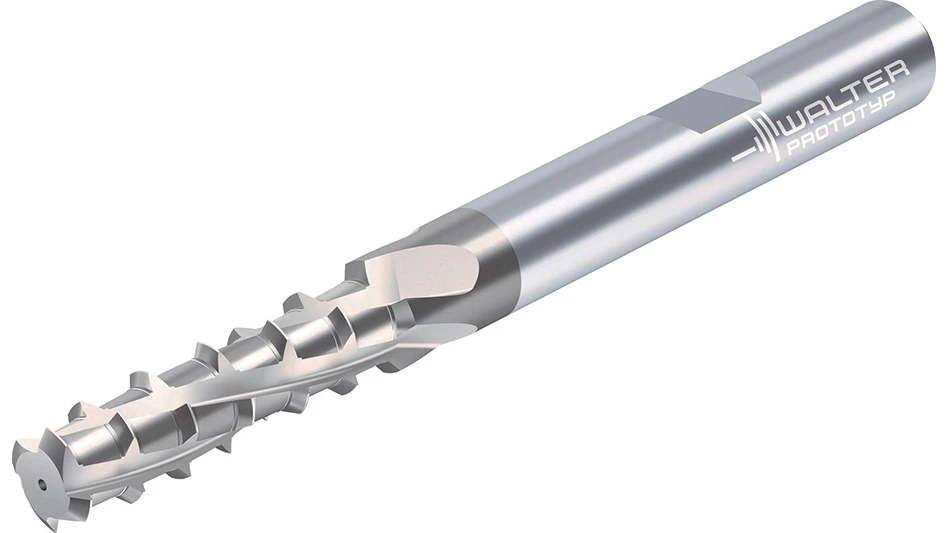
Instead, opt for tools built for HFSM. One example is Sandvik Coromant’s CoroMill Dura, a solid end mill series designed with adaptive strategies in mind. Featuring variable helix and pitch geometries, CoroMill Dura minimizes vibration while maintaining consistent cutting forces, even at high speeds. Its reinforced corners and optimized flute design help prevent premature wear and edge failure, common issues when general-purpose tools are used for HFSM applications. Sandvik Coromant also offers specifically-designed solid end mills for nickel alloys and titanium – 1710 grade and 1745 grade, respectively.
Steps for best-practice aerospace machining
Throughout all these examples, one thing is clear: optimized tooling enables faster, more efficient machining and more stable operations. Fortunately, implementing this approach doesn’t have to require a full tooling overhaul. It starts with identifying a few key operations, such as slotting and finishing, and evaluating whether the current tool in use is really the best fit for that task.
The goal is to match tooling to material, strategy, and geometry. By looking closely at part features and cutting parameters, manufacturers can choose tools purpose-built for those conditions. Where possible, avoid basing cutting parameters on general feeds and speed charts. Instead, focus on supplier cutting data developed under controlled conditions tailored to the tool’s geometry and intended use. This data-driven approach is crucial to validate tool choice and detect any process instabilities early on.
An effective way to achieve this is working closely with tooling suppliers who specialize in aerospace applications. This is because suppliers who offer application-specific tools often collaborate with aerospace manufacturers to test and validate their tools under real-world conditions. This partnership provides manufacturers access to detailed process knowledge, material behavior insights, and proven machining strategies, contributing to more predictable and scalable outcomes.
Equally important is access to comprehensive tooling resources. Many leading suppliers offer online tool selectors and recommendation engines to help engineers identify the right tool for the material, application type, and cutting conditions. Sandvik Coromant, for example, developed its CoroPlus Tool Guide, a powerful online and mobile platform helping shops and operators find the right cutting tools based on their workpiece material or specific task. Shops can also find machining process and cutting data recommended for specific tools. Manufacturers can explore recommended tooling solutions tailored to the exact aerospace components they’re producing, helping to ensure process reliability from the start.
Using general-purpose tools across every operation might seem efficient, but it rarely holds up under the challenges of modern aerospace machining. Precision components such as compressor casings, blisks, and titanium frame components demand tooling designed to handle their unique challenges. Selecting optimized tools not only enhances cycle times and reduces scrap but also ensures the critical tolerances and surface finishes the aerospace industry demands. Ultimately, the smartest way to simplify the process is by using the right tool for each job.
Sandvik Coromant
https://www.sandvik.coromant.com
Explore the September 2025 Issue
Check out more from this issue and find your next story to read.
Latest from Aerospace Manufacturing and Design
- Assemble-to-order program for gundrilling machines
- #83 Manufacturing Matters - Workholding Roundtable
- Increase speed, productivity, and agility with automation technology
- Real-world manufacturing insights from industry experts
- The Lee Company opens Innovation Center
- Precision XY gantry system
- Archer to test Starlink onboard its Midnight air taxis
- System eliminates cage-creep in sliding bearings