Editor's Note: This article originally appeared in the October 2025 print edition of Aerospace Manufacturing and Design under the headline “Customize gear skiving for precise, efficient gear cutting.”

Producing many slots on a gear is a challenging process requiring high accuracy. Manufacturers need to achieve high accuracy while being as productive as possible, cutting slots fast. Traditional gear cutting processes include broaching, shaping, hobbing, or using a specialized end mill. Although effective, each method has disadvantages.
Broaching requires special broaching machines that are very expensive and difficult to set up. Each part must be set up individually, which can take multiple hours. Depending on the complexity of the part, each broach can cost thousands of dollars.
Shaping is an older method of skiving without spindle or part rotation. Shaping is essentially broaching but using a circular tool. As with broaching, shaping requires a specialized shaping machine.
Hobbing is a very efficient way of machining gear teeth, but the main downside is having to use a special hobbing machine. Also, the hobbing cutter can be very expensive.
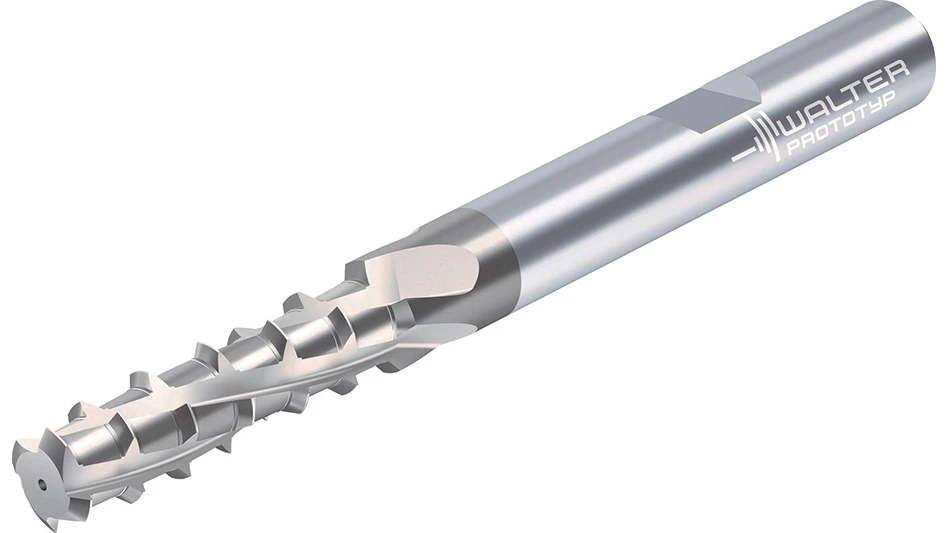
In addition, gear manufacturers may use a special form end mill to cut gears for applications where skiving can’t be applied because it isn’t involving the I.D. or O.D. of the teeth, but this strategy can only cut one tooth at a time. When using an end mill, you can use the same machine and setup for other features on the part. One advantage of this strategy is it can be used on gear teeth that can’t be machined in other ways. An example of this is a Hirth spline application, where two EMUGE special form end mills are efficiently cutting the gear teeth on the face of a cylinder in just one operation.

Gear skiving optimizes slot cutting
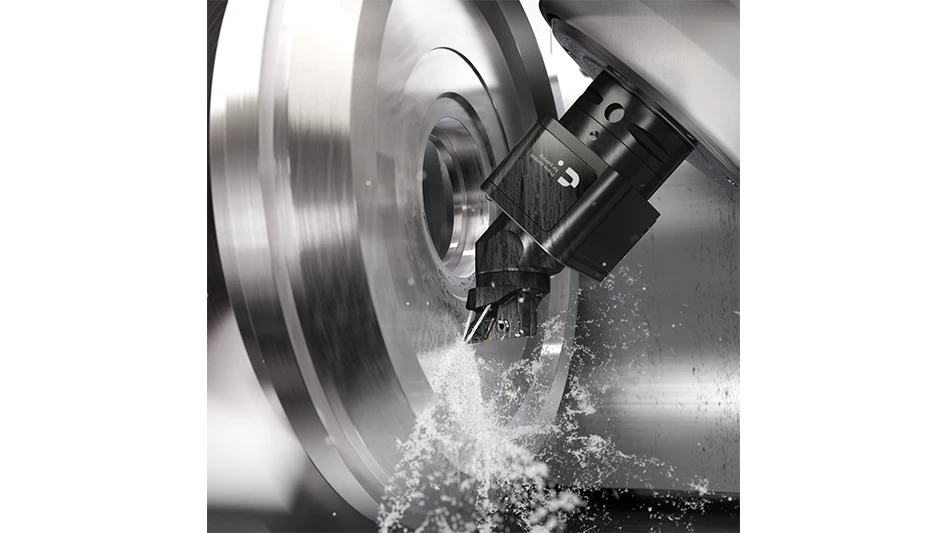
Now manufacturers have a relatively new option which offers several key advantages – gear skiving on machining centers. Gear skiving on a mill/turn machining center with fully synchronous spindles is highly efficient, fast, and accurate. In some cases when producing small and medium-size volumes, gear skiving will gradually replace established gear cutting processes.
To implement gear skiving requires the right tooling. To begin, work with a cutting tool manufacturer with the expertise to custom design the solution for your specific application needs. For example, EMUGE-FRANKEN USA (West Boylston, Massachusetts) offers complete skiving technology solutions, and at the completion of the design and manufacture of the gear skiving tooling, a data sheet for each tool. The data sheet includes all the necessary machining parameters including recommended rotational speeds, machining time, infeed strategy, and cutting coordinates for each cut. This data sheet essentially provides manufacturers with a tested process to follow for optimal results.
A gear skiving wheel should work on internal and external gears. This can be a shell tool or a shank tool comprised of high-speed steel (HSS) or carbide. After the skiving wheel has been designed based on a 3D drawing and the part, the skiving process can be simulated to show the wheel passing through a tooth gap in the gear. In this first step, penetration occurs and results in interlocking and cutting. Then the adjusting screws can be turned until the skiving wheel is geometrically defined.
During the design process, collision checks are performed to produce a tool drawing with all the required parameters ranging from the number of teeth to the axis cross angle, to the recommended machining speeds and feeds. It’s important to adhere to these specifications because while deviations from the specified machine speed may not immediately lead to a collision, the gear cutting quality and result would surely degrade.
Once the tool design has been determined, the skiving tool can be produced. Manufacturing the skiving tool to integrate it into a demanding gear cutting process requires tactile measurement technology. In addition to optical measurement, your cutting tool manufacturer may use a special sensor probe to measure with high accuracy the proper gear geometry. The sensor probe is a precise, safe, and repeatable method for inspecting the gear skiving wheels and for scanning and evaluating the complete gear profile.

Skiving application success
In a planetary gear carrier application at a large automotive supplier, tool life was quadrupled using an EMUGE-FRANKEN skiving tool setup when compared with using competitive specialized end mills. A planetary gear carrier is an essential component of an automatic transmission because it carries the planetary gears needed to couple the sun and ring gears. The central point of an automatic gearbox is the sun wheel orbited by several shafts. These shafts have gear wheels, called the planetary gears, which move like planets orbiting a central sun. This structure is surrounded by a ring gear. As the name suggests, the planetary gear carrier carries the planetary gears. By changing gears in the gearbox, the interaction of the various gears changes so the drive operates at the optimal speed and load range.
The automotive supplier tested the skiving solution for the external and internal gearing of planetary gear carriers, and due to the application success, has put the solution into production for increased tool life and productivity.
Clamping the skiving tool and gear
It’s useful to know about clamping options for the tool and gear. Skiving tools can be clamped in several ways. For example, tools with shanks can be held with EMUGE FPC chucks. High Precision/Performance FPC chucks provide rigidity, vibration dampening, concentricity, machining speed, and tool life compared to conventional chuck technologies for milling and drilling applications. Featuring a 1:16 worm gear, the EMUGE FPC chuck’s patented design delivers three tons of traction force. The unique design and body provide 100% holding power for maximum rigidity, and the collet-cone assembly absorbs virtually all vibration for maximum dampening.
Since the concentricity of the FPC collets is very good, this chuck is recommended for holding the skiving tool versus using a shrink type chuck. A tool holder such as FPC ensures less chatter, minimal vibration, and increased process stability and tool life.

However, a different clamping approach is necessary for bell-type roller wheels with a bore. An optimal clamping solution is based on an expanding mechanical element. For example, EMUGE-FRANKEN offers an SG Expanding Bushing design – a mechanical solution using a buttress type thread. The SG Bushing expands and contracts evenly over the entire length of the cutter bore and pulls the cutter toward the end stop, increasing rigidity and transferable torque values, resulting in better tooling life. It can be designed with thin walls, allowing for a more robust and stable base body. Additionally, the tightly toleranced clamping bolt provides stability, and axial tightening ensures vibrations can be dissipated into the stop, which is diamond-coated to increase the torque.
When clamping the gear, a diaphragm chuck can achieve superior concentricity and roundness, even on filigree parts. This clamping solution adapts very well to the part contour. It also protects against contamination from coolant and swarf. In roughing operations, the clamping force can be further increased by the pulling force of the machine tool. In addition, due to the integrated centrifugal force compensation of the diaphragm, the part is tightly held even at higher machining speeds.
With the variety of parts roller peeled today, the diaphragm chuck is commonly tailored to ring gears or similar designs. However, custom clamping solutions featuring mandrels or chucks of other designs can serve a range of part geometries.
EMUGE-FRANKEN USA
https://www.emuge-franken-group.com
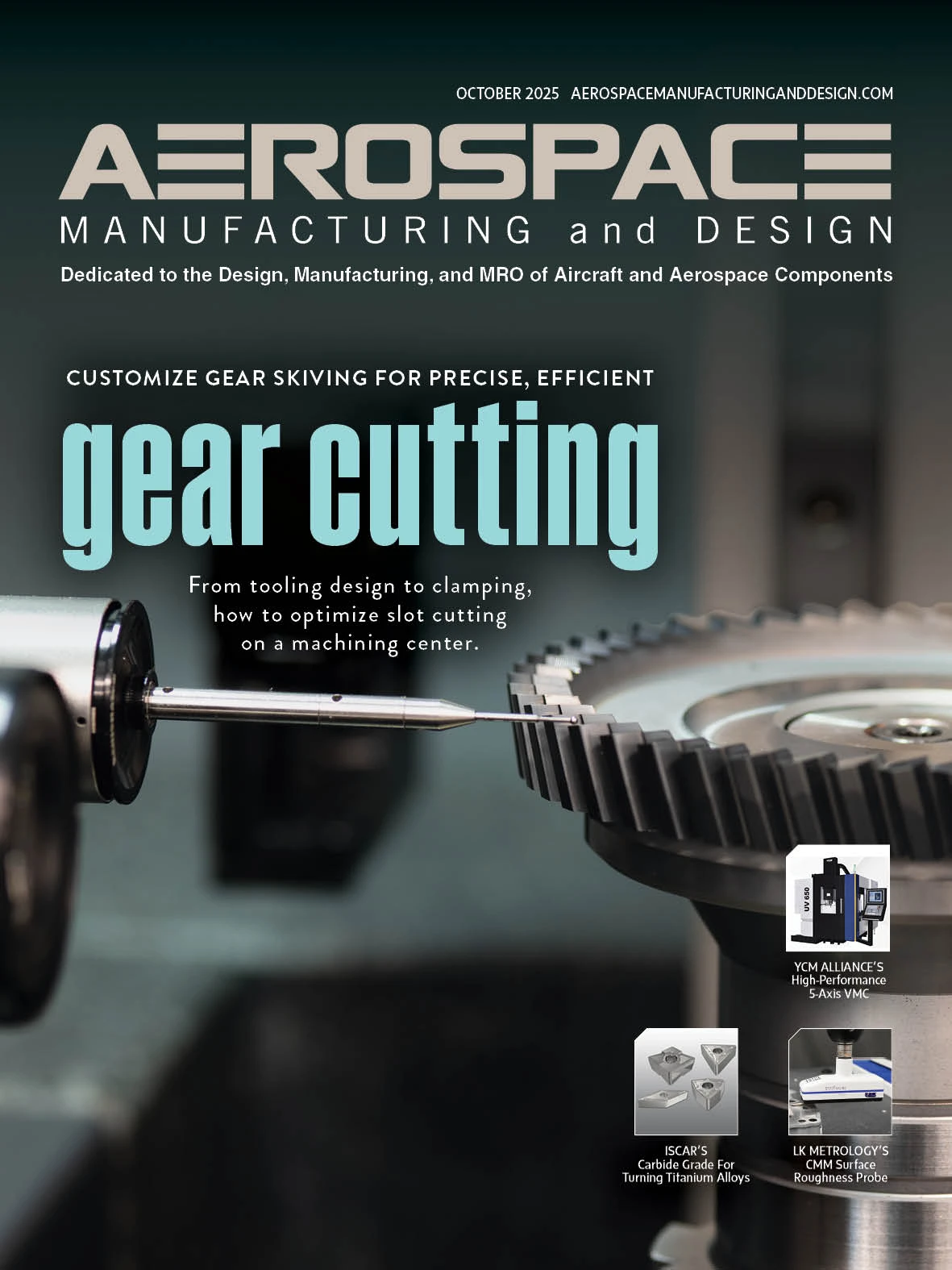
Explore the October 2025 Issue
Check out more from this issue and find your next story to read.
Latest from Aerospace Manufacturing and Design
- Assemble-to-order program for gundrilling machines
- #83 Manufacturing Matters - Workholding Roundtable
- Increase speed, productivity, and agility with automation technology
- Real-world manufacturing insights from industry experts
- The Lee Company opens Innovation Center
- Precision XY gantry system
- Archer to test Starlink onboard its Midnight air taxis
- System eliminates cage-creep in sliding bearings