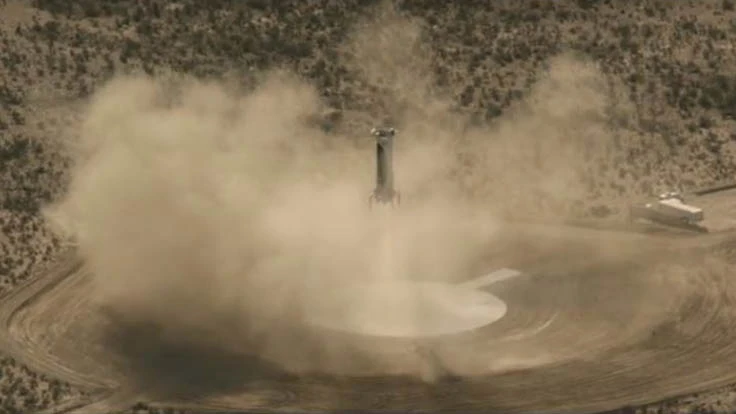
Kent, Washington – Blue Origin’s reusable rocket, New Shepard, flew again on April 2, 2016, from a remote location in West Texas, reaching an apogee of 339,178ft (103km). It was the third flight with the same hardware, named in honor of America’s first astronaut in space, Alan Shepard. The first successful flight and booster return occurred in December 2015; the second Jan. 22, 2016.
After sending New Shepard’s unmanned, 6-person crew capsule toward Earth to make a soft landing under three parachutes, controllers prepared the booster for the propulsive landing. With the booster rapidly dropping vertically, the BE-3 engine restarted only 3,600ft above the ground and ramped up to high thrust quickly, allowing the rocket to touch down on concrete pad at 4.8mph. The company’s video captures the phases of flight.
Source: Blue Origin
Latest from Aerospace Manufacturing and Design
- Airbus, Kratos to test uncrewed combat aircraft with a European mission system
- Flexure-guided piezo stages
- #84 Manufacturing Matters - Defense Industry Trends with Greenwich Capital Group
- America Makes announces two project calls worth more than $35M in funding
- Join the automation conversation
- Enhanced visitor experience highlighted at TMTS 2026
- This week: Tube bending and workholding solutions to implement now
- Dassault Aviation unveils the Falcon 10X