AMR vs. AGV
AMRs use sensors, artificial intelligence (AI), 2D vision systems, and 3D vision systems to navigate in complex work environments.
Autonomous guided vehicles (AGVs) are mobile but use wires or tracks, moving along narrowly defined routes.
Common AMR uses
- Unloading trailers
- Warehouse fleet management
- Conveyor systems
- Manufacturing work cells
- Tugger, trolley replacement
- Pick-and-place
First used by NASA for space exploration, autonomous mobile robots (AMRs) are one of the fastest-growing categories in the automation world, capable of guiding themselves across factories to perform work in multiple locations.
Industries using AMRs
- Aerospace
- Semiconductors
- Automotive
- Logistics
- Manufacturing
- Textiles
- Retail
Reasons for service robot deployment
- Productivity/efficiency
- Product/service quality
- Operational capacity
Retail/service robots
IDC’s 2018 Commercial Service Robotics Survey: More than 90% of companies surveyed plan commercial service robot use; led by retail, wholesale/distribution.

ILLUSTRATION © ANDSUS, ADOBE STOCK
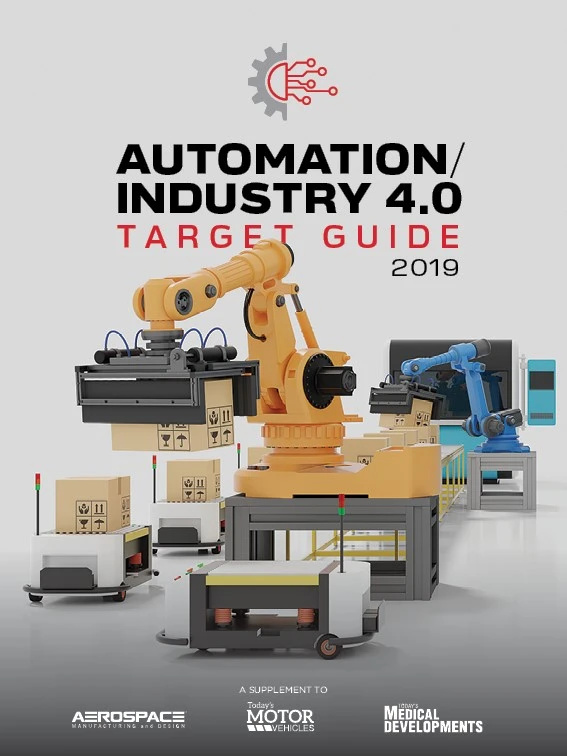
Explore the Automation Target Guide Issue
Check out more from this issue and find your next story to read.
Latest from Aerospace Manufacturing and Design
- Enhanced visitor experience highlighted at TMTS 2026
- This week: Tube bending and workholding solutions to implement now
- Dassault Aviation unveils the Falcon 10X
- Industrial round bumpers
- Defense Industry Trends webinar with Greenwich Capital Group
- Air Astana finalizes order for 25 Airbus A320neo family aircraft
- Syensqo showcases high-performance sustainable composites at JEC World 2026
- Multi-axis laser processing system