December 19, 2010 is not that far away and when we reach that date, everyone who buys NEMA frame motors 140 frame and up, as well as IEC frames 90 and up, will have to make sure they are purchasing and specifying newly-compliant motors.
The Energy Independence and Security Act of 2007 (EISA), signed into law on December 19, 2007, goes into effect on December 19, 2010. EISA mandates the minimum efficiency of electric motors produced after this date for sale in the United States and raises the energy efficiency standards from the Energy Policy Act of 1992 (EPAct). This impacts a wide range of industrial motors. EISA builds upon the previous EPAct updating mandated efficiency standards for general purpose, three-phase AC industrial motors from 1hp to 200hp, and adds levels for some 1hp to 500hp motors previously not covered in EPAct.
Like EPAct, EISA mandates the minimum efficiency levels of motors sold in the U.S. at the point of the motor manufacturer or importer.
Plus any completed equipment that is brought into the United States for sale containing a motor that fits 1hp to 500hp requirements, as specified in EISA, must meet the efficiency requirements of the law.
"The Original Equipment Manufacturers (OEMs) that build equipment will need to see if the particular motors used in their equipment will fall under the new law," explains Baldor Electric Company's Senior Product Manager – AC Motors, John Malinowski. "If so, they will need to upgrade their motors and they may need to resubmit their equipment to UL or CSA for approvals." For each general-purpose rating motors (subtype I) from 1hp to 200hp, the law specifies a nominal full-load efficiency level based on NEMA Premium efficiency. All motors currently under EPAct, manufactured after December 19, 2010, must meet or exceed this efficiency level.
General purpose electric motors (subtype II), those not previously covered by EPAct, will be required to comply with the Energy Efficient standards as defined by NEMA MG1. The term general purpose electric motor (subtype II) means motors incorporating the design elements of a general purpose electric motor (subtype I) that are configured as one of the following:

- U-Frame motor
- Design C motor
- Close-coupled pump motor
- Footless motor
December 19, 2010 is not that far away and when we reach that date, everyone who buys NEMA frame motors 140 frame and up, as well as IEC frames 90 and up, will have to make sure they are purchasing and specifying newly-compliant motors.
The Energy Independence and Security Act of 2007 (EISA), signed into law on December 19, 2007, goes into effect on December 19, 2010. EISA mandates the minimum efficiency of electric motors produced after this date for sale in the United States and raises the energy efficiency standards from the Energy Policy Act of 1992 (EPAct). This impacts a wide range of industrial motors. EISA builds upon the previous EPAct updating mandated efficiency standards for general purpose, three-phase AC industrial motors from 1hp to 200hp, and adds levels for some 1hp to 500hp motors previously not covered in EPAct.
Like EPAct, EISA mandates the minimum efficiency levels of motors sold in the U.S. at the point of the motor manufacturer or importer.
Plus any completed equipment that is
- Vertical solid shaft normal thrust motor
- An 8-pole motor (900rpm)
- A poly-phase motor with voltage of not more than 600V (other than 230V or 460V)
- 201hp to 500hp motors not previously covered by EPAct will be required to comply with Energy Efficient standards as defined by NEMA MG1, Table 12-11.
Only 1hp to 500hp motors with three-digit frame NEMA numbers – 143T and up – are included in EISA, also including equivalent IEC frame designations.
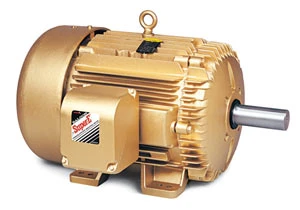
Baldor Electric Co. has been working since the law was signed to make sure the compliance with EISA is simple and easy for their customers to understand. Baldor's existing Super-E premium efficient motors, introduced in the 1980s, currently meet or exceed the NEMA Premium efficiency level requirements mandated by the Act. Additionally, Baldor is increasing their existing reliable Standard-E efficient motor line to the levels required by EISA. A complete guide to The Energy Independence and Security Act of 2007 is available for download at: baldor.com/support/ literature_load.asp?LitNumber=MS501.
Generally speaking, NEMA Premium efficient motors, such as Baldor's Super-E, currently have efficiency levels that meet or exceed the EISA.
According to statistics provided by Baldor, electricity accounts for nearly 98% of the lifetime cost of electric motors. Learning more about the motors you currently specify, and taking the necessary steps to address any required changes before the end of 2010, can help you avoid the hassle of last-minute design alterations.
Explore the August September 2009 Issue
Check out more from this issue and find your next story to read.
Latest from Aerospace Manufacturing and Design
- OMA and NIMS partner to launch semiconductor technician credentials
- Analysis, trends, and forecasts for the future of additive manufacturing
- BlueForge Alliance Webinar Series Part III: Integrate Nationally, Catalyze Locally
- Blaser Swisslube, NIDEC Machine Tool America partner
- Extrusion crosshead combines concentricity adjustment, fastener-free assembly
- Vertical Aerospace unveils Valo eVTOL aircraft
- 3xD pilot step drill
- #56 Lunch + Learn Podcast with Techman Robot + AMET Inc.